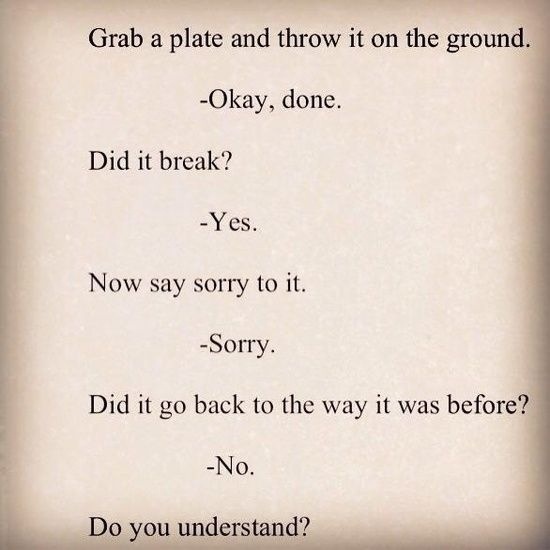
“Judge
me when you are perfect.” How amazing would life be if people actually followed
this advice? I have yet to meet a perfect person, and I also have yet to meet a
nonjudgmental person.
Human beings feel that it is natural
to judge one another’s actions and then label people accordingly.
Attempting
to explain other people’s behavior without knowing their situation leads to cognitive biases in
attribution, which are faulty ways of
explaining.
Two forms of cognitive biases are
the fundamental
attribution error (FAE) and the actor-observer effect. By identifying their causes
as ignorance and unrealistic expectations, one can work to dispel these skewed
mindsets and consequently understand others.
To eradicate the FAE and the
actor-observer effect, they have to be recognized as problems first.
So what exactly are they?
First, let’s introduce some terms
with examples.
Say that a classmate did poorly on a
test. Now, it’s up to an observer to interpret why they did badly.
Situational factors are based on external events (Nevid 628). If the classmate’s
behavior was explained in terms of situational factors, the observer would say,
“They did poorly because they didn’t get enough sleep.”
On the other hand, dispositional
factors are based on internal traits (Nevid 628). If the classmate’s
behavior was explained in terms of dispositional factors, the observer would
say, “They did poorly because they are stupid or too lazy to study.”
Here, the person is blamed rather
than the situation. This is called the fundamental attribution error: “When we see someone
doing something, we tend to think it relates to their personality rather than the situation
the person might be in” (Sherman).
By overemphasizing internal factors
as the cause of someone’s behavior, situational factors that may have actually
caused their behavior are falsely disregarded.
The actor-observer effect takes the
FAE to another level.
The FAE says that we explain others’
behavior by their internal factors rather than their situation. So if someone
else does badly on a test, we think they are stupid.
The actor-observer effect goes on to
say that when we are explaining our own
behavior, we do the exact opposite: we blame the situation, not our own
internal traits (Prentice).
Thus, when we do badly on a test, we don’t call ourselves stupid; rather, we
rationalize that the test was too hard or not fair.
The person we are judging is the
“actor” while we are the “observer” (Nevid 628). We judge the actor (the other
person) and the observer (ourselves) differently in order to make ourselves
feel better.
A perfect quote to sum up the
actor-observer effect is the following:
“We judge
ourselves by our intentions and others by their behavior.”
Again, the actor-observer effect is
an error in thinking.
Why do the FAE and the actor-observer effect occur?
One cause is simply not knowing the
situations that other people are in (Gilbert and Malone).
If a teacher starts screaming at a
student, then that student immediately labels the teacher as a “jerk.” However,
did the student know that his teacher’s engagement just got broken, or that his
teacher’s mom just died, or that his teacher has cancer?
Now, after knowing that, would he
interpret the situation differently when his teacher screams at him?
The FAE occurs because we don’t know
anything about what’s going on inside the person that makes them act in a
certain way (Gilbert and Malone).
It takes too much time and effort to
figure out someone’s story, so clearly we need to make assumptions instead,
right?
It may be tempting to judge people simply
because we don’t know what’s going on in their lives. But we need to stop.
Ignorance doesn’t make judging
others okay. It’s our own fault that we don’t take the time to figure out why a
person is acting the way they are.
Maybe they are being rude just
because they are having a bad day.
If we don’t know what they are going
through, then we have no right to judge. It’s as simple as that.
To understand an actor’s behavior,
we need to first understand their situation and dispel our ignorance.
One way to do so is to give them the
benefit of the doubt. When a person sees someone doing something wrong, they
shouldn’t automatically jump to the worst possible conclusion. They should try
to understand that the other person may have a good reason to do what they did.
If a teacher screams at a student
for not trying hard enough, don’t assume that the teacher is a mean person.
Instead, realize that the teacher is trying to bring out the best in her
students. Also, the teacher could be in a cranky mood because of external
factors, such as problems at home.
Simply changing the way we think is
one way to try to understand others.
However, there is only one way to
accurately understand others’ situations. To do so, talk to the person, and ask
them why they did what they did.
If a person sees that a classmate
did badly on a test, they shouldn’t just assume that their classmate is lazy or
stupid. Ask that classmate if they are just having a hard time understanding
the material. How bad would that person feel for judging their classmate if
their classmate’s reply was “I wasn’t in the mood to study because my parents
are getting divorced”?
Often, we are blind to other
people’s situations. Let’s give them a chance to
tell their own story before we make one up for them ourselves.
Another cause of the FAE is our
unrealistic expectations for others’ behavior, even after knowing the situation
they are in (Gilbert and Malone). We expect others to act in a certain way, and
when they don’t, we label them.
Little do we realize how faulty our
own expectations are.
For example, we expect others to
follow the rules at all times, and when they don’t, they are a “troublemaker.”
Let’s put that in context. Imagine a person driving on the highway, and
suddenly a car, going 30 miles per hour over the speed limit, overtakes them.
The driver is caught off guard by the sudden appearance of the car. Road rage
engulfs them as they think to themselves, “That idiot!”
The driver’s expectation is that
everyone should always follow the rules. However, let’s take a look at the
situation. Inside the car that overtook the driver is a couple. The husband is
driving the car, and the wife is sitting in the passenger seat, about to give
birth and desperately needing to get to the hospital.
No wonder they were speeding, huh?
And most likely, whenever we ourselves
are speeding, we don’t consider ourselves “troublemakers” or “idiots” because we
think we have a good enough reason to do so (actor-observer effect) (Prentice).
Is this hypocrisy justified?
Not at all.
So how do we fix these mindsets?
First of all, we need to reconsider
our own expectations. We expect boys to never cry in public, we expect students
to get straight A’s all the time, and we expect political figures to solve
every single issue in this country.
And when our expectations aren’t
met, boys become “weak,” students become “stupid,” and political figures become
“incompetent.”
However, it’s rarely the people
themselves that are the problem. The fault lies in our own mindsets. We have to
fix them by questioning ourselves when we judge people.
If we find ourselves disgusted by
someone else’s behavior, let’s ask ourselves why we feel that way. If we are
watching our favorite basketball team play, and the lead player misses a shot, we
may think to ourselves, “Wow, he’s not even trying.”
But why are we thinking that?
Is it because we didn’t understand
the situation—he was just nervous?
Or is it because of our unrealistic
expectation—a professional basketball player should never mess up?
Whichever it is, it leads to making
faulty conclusions about others’ behaviors.
We can fix these expectations by
replacing them with more practical ones, such as: “Boys, students, political
figures, and basketball players are all human beings. They should try their
best, but it’s okay when they mess up. Everyone messes up.”
Our lower expectations can actually
be met, and consequently we won’t have a reason to become irritated with others
when they mess up.
If we have a hard time fixing our
faulty expectations, we can write them down on a sheet of paper, physically
cross them out, and write down a more realistic expectation instead. We can stick
the list on our mirrors so that we can be reminded of them every day.
We need to remind ourselves that
it’s okay when others mess up, and we need to realize that everyone has bad
days, which may lead to them acting negatively. In this way, we can keep our
expectations in check and our judgments to a minimum.
Clearly, we are quick to judge
others.
But then why don’t we judge ourselves in the same way?
When we mess up, we like to blame
the situation rather than ourselves.
Our rationale makes perfect sense.
We need high self-esteem. If we think we did badly on that test because we’re
stupid, then that’s a blow to our self-esteem. Similarly, we assume that
someone else that did badly is stupid because we want to think that we are
smarter than them.
However, what’s the point of
self-esteem if we’re building ourselves up by putting others down? In reality,
lawyer Robert Prentice claims that we are just making ourselves seem cocky
rather than helping ourselves.
Additionally, we like judging
others’ actions because then we can “predict others and thereby control the
extent to which others’ behavior can affect [us]” (Gilbert and Malone).
If we label a classmate as “stupid,”
then in our minds, they get bad grades all the time. They are not going to
study for the next test either, probably.
If we label a teacher as “rude,”
then in our minds, they don’t even have a nice side. We bet that the teacher
snaps at everyone.
And what’s the benefit of being able
to predict others’ behaviors? It gives us a sense of control (Gilbert and
Malone). We are able to determine what that person will do next.
Certain cultures actually encourage
this predictability: “Drawing dispositional inferences may be only one way of
satisfying the need for control, but it seems to be the one way prescribed by
Western culture” (Gilbert and Malone).
Although the Western culture tends
to crave control, they are other ways to feel dominant that don’t require us to
make assumptions about others. Just because the Western culture embraces
individualism and taking responsibility for one’s own behavior doesn’t mean
it’s always right. Labelling others
by their behavior is what has been done for decades in the Western culture, but
believing that mere tradition justifies action is the appeal to tradition
fallacy.
Additionally, we tend to skew the
situation to fit our predictions. So if a student doesn’t know the answer to
one question (but is able to answer twenty other questions correctly), we say,
“See, he’s just stupid.” If a teacher is mean to one person (but nice to twenty
others), we say, “See, she’s just rude.”
We want to feel right, we want to
feel powerful, and we want to feel better about ourselves.
And that’s why we like labeling a
person and then using those labels to predict their behavior.
However, we need to see the bigger picture. The key to this is
empathy.
When do we snap at others? Probably
when we are in bad moods. So our teacher may also just be in a bad mood;
there’s no need to label them as “rude.”
When do we do badly on tests?
Probably when the test is hard. So our classmate may also have thought their
test was hard; that doesn’t mean they are stupid.
Let’s put
ourselves in others’ shoes to understand their actions (Sherman). We don’t
judge ourselves as much, so learn to look at others in the same way.
In our
own lives, if we are able to blame the situation instead of ourselves, let’s
not forget that situations affect other people too. Situational factors are not
unique to just us.
To put it simply…Problem: judging others. Solution: stop judging
others.
No one
is born as a judgmental person.
We have learned it from our
ignorance and our unrealistic expectations. By getting to know other people and
by coming up with realistic expectations instead, we can work to understand
others better and empathize with their behaviors.
The fundamental attribution error is
clearly an error; the name says it all!
The FAE and the actor-observer
effect are merely forms of judging others, and we should only judge others when
we are perfect. How amazing would life be if people actually followed this
advice? I have yet to meet a perfect
person, but maybe the next nonjudgmental person I meet will be you.
Works Cited
Gilbert, Daniel T., and Patrick S. Malone. “The
Correspondence Bias.” Danielgilbert.
The American Psychological Association, 1995. Web. 25 Apr. 2016.
Nevid, Jeffrey S. Psychology:
Concepts and Applications. Boston: Houghton Mifflin Company, 2003. 628. Print.
Prentice, Robert. "Fundamental
Attribution Error." Ethics Unwrapped.
Ethics Unwrapped, 2016. Web. 22 Apr. 2016.
Sherman, Mark. "Why We Don’t Give
Each Other a Break." Psychology
Today. Sussex Publishers, 20 June 2014. Web. 22 Apr. 2016.